Blog

Ankle Sprains Among Female Basketball Players

Ankle sprains are one of the most common injuries among female basketball players. The fast pace of the game requires repeated jumping, sudden direction changes, and quick stops, which place high stress on the ankle joint. An ankle sprain occurs when the ligaments, which are strong bands of tissue that connect bones to each other, are stretched or torn. Research following professional female players over two seasons found that ankle sprains led to significant time missed from games and practices. Most injuries occurred during games, often after contact with another player and frequently inside the key area of the court. A podiatrist can evaluate ankle stability, assess ligament damage, order imaging if needed, and provide bracing or other medical treatment to reduce the risk of repeat injury. If you have sprained an ankle, it is suggested that you make an appointment with a podiatrist for an exam, diagnosis, and treatment.

Although ankle sprains are common, they aren’t always minor injuries. If you need your ankle injury looked at, contact John Killough, DPM from Regional Foot Center. Our doctor can provide the care you need to keep you pain-free and on your feet.

How Does an Ankle Sprain Occur?

Ankle sprains are the result of a tear in the ligaments within the ankle. These injuries may happen when you make a rapid shifting movement while your foot is planted. A less common way to sprain your ankle is when your ankle rolls inward while your foot turns outward.

What Are the Symptoms?

  • Pain at the sight of the tear
  • Bruising/Swelling
  • Ankle area is tender to touch
  • In severe cases, may hear/feel something tear
  • Skin discoloration

Preventing a Sprain

  • Wearing appropriate shoes for the occasion
  • Stretching before exercises and sports
  • Knowing your limits

Treatment of a Sprain

In many cases, the RICE method (Rest, Ice, Compression, and Elevate) is used to treat ankle sprains. However, you should see a podiatrist to see which treatment option would work best with your injury. In severe cases, surgery may be required.

It is important to ask your doctor about rehab options after you receive treatment for your injury. Stretching, strength training, and balance exercises may help the ankle heal while also preventing further injury.

If you have any questions, please feel free to contact our offices located in Charleston and Effingham, IL . We offer the newest diagnostic and treatment technologies for all your foot care needs.

Read more about Ankle Sprains

Understanding Fungal Nails and Black Toenails

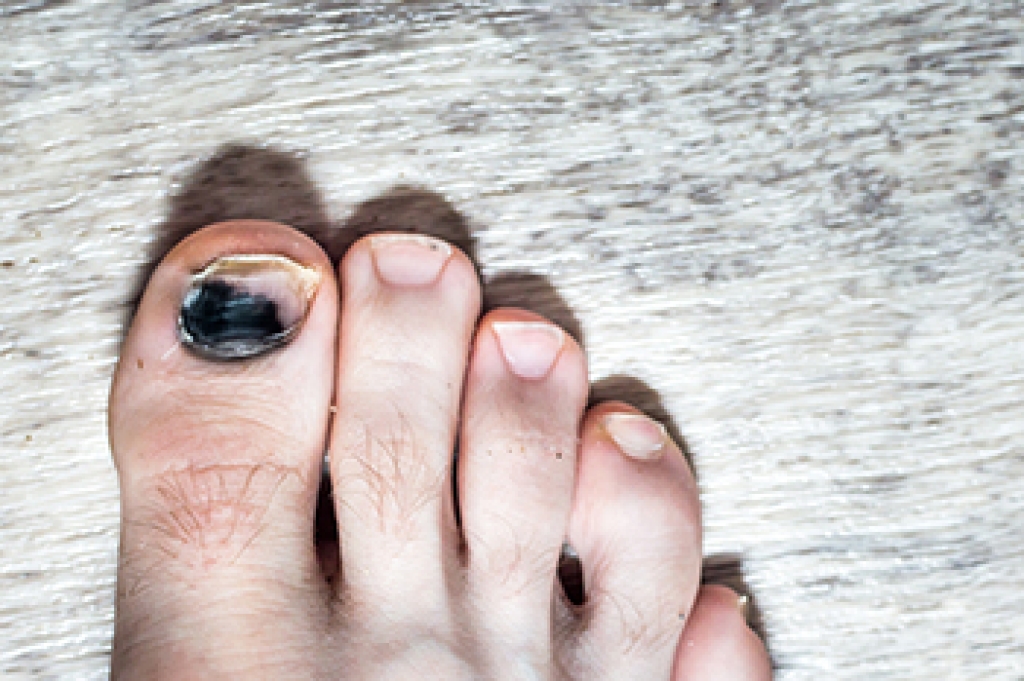
Fungal nails and black toenails are common concerns that can affect both comfort and confidence. A fungal nail often begins as a yellow or white discoloration and may thicken, crumble, or lift from the nail bed over time. The nail can appear brittle and distorted and may feel tender or produce a mild odor. A black toenail is frequently caused by trauma, such as repetitive pressure from running or wearing tight shoes, that leads to bleeding beneath the nail. A fungal toenail can lead to a black toenail, It may look dark purple or black and can feel sore or throbbing. Risk factors include damp environments, shared locker rooms, ill-fitting footwear, injury, and certain medical conditions. A podiatrist can examine the nail and order laboratory testing to confirm infection or rule out other causes. Treatment may include antifungal medication, trimming and debridement, footwear guidance, or minor procedures. If you have fungal nails or a black toenail, it is suggested that you make an appointment with a podiatrist.

If left untreated, toenail fungus may spread to other toenails, skin, or even fingernails. If you suspect you have toenail fungus it is important to seek treatment right away. For more information about treatment, contact John Killough, DPM of Regional Foot Center. Our doctor can provide the care you need to keep you pain-free and on your feet.

Symptoms

  • Warped or oddly shaped nails
  • Yellowish nails
  • Loose/separated nail
  • Buildup of bits and pieces of nail fragments under the nail
  • Brittle, broken, thickened nail

Treatment

If self-care strategies and over-the-counter medications does not help your fungus, your podiatrist may give you a prescription drug instead. Even if you find relief from your toenail fungus symptoms, you may experience a repeat infection in the future.

Prevention

In order to prevent getting toenail fungus in the future, you should always make sure to wash your feet with soap and water. After washing, it is important to dry your feet thoroughly especially in between the toes. When trimming your toenails, be sure to trim straight across instead of in a rounded shape. It is crucial not to cover up discolored nails with nail polish because that will prevent your nail from being able to “breathe”.

In some cases, surgical procedure may be needed to remove the toenail fungus. Consult with your podiatrist about the best treatment options for your case of toenail fungus.  

If you have any questions please contact our offices located in Charleston and Effingham, IL . We offer the newest diagnostic and treatment technologies for all your foot and ankle needs.

Read more about Toenail Fungus

Are You Suffering From Ingrown Toenails?

If left untreated, an ingrown toenail can lead to more serious concerns, such as an infection. Knowing proper nail care can help in the prevention of an ingrown toenail. Give us a call, and get treated!

Connect with us